
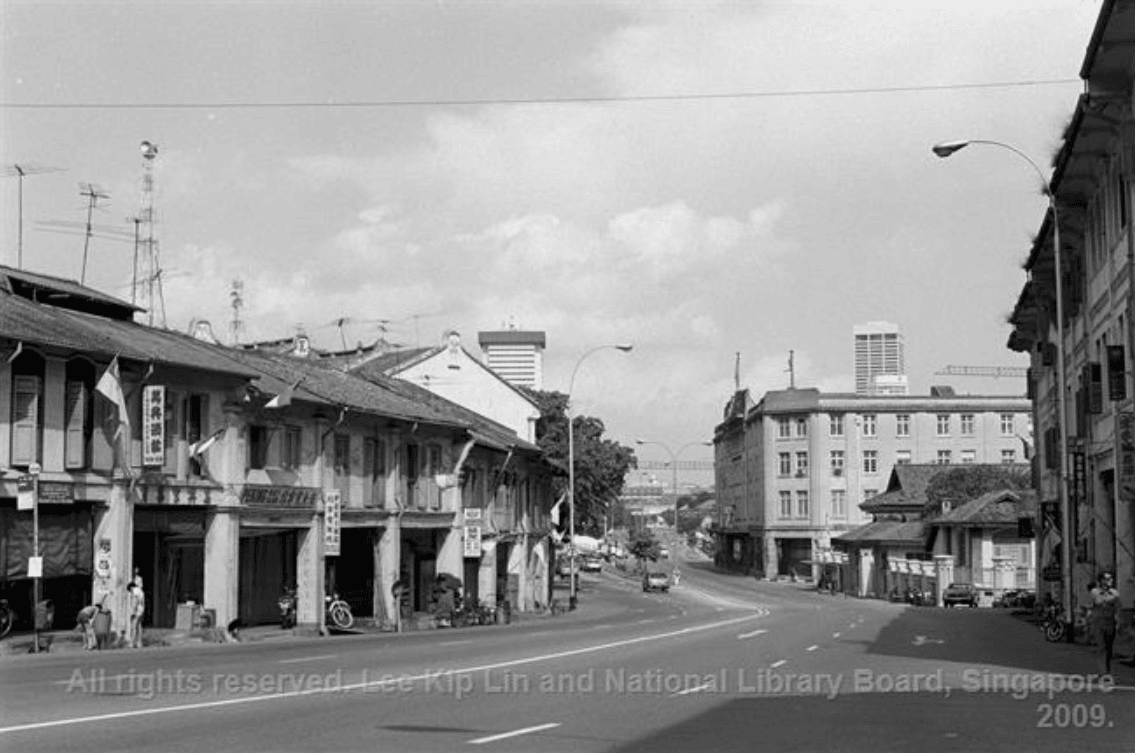
A 1982 photograph of River Valley Road towards Tank Road. Credits: Lee Kip Lin Collection, National Library Singapore
Walk down River Valley Road from White Room Studio and, within a few minutes, you reach a stretch of Tank Road where several layers of Singapore’s history sit close together. There is a temple founded in 1859, a church built on the site of an old soy sauce factory, and Fort Canning rising behind them.
It is easy to miss how much history sits within this short stretch of road. For twenty-nine years, Tank Road was also the terminus of Singapore’s first railway. Trains came and went from here while the temple received devotees, the church held Mass, and Fort Canning looked down over the road.
Which temples and churches stand on Tank Road?
At 15 Tank Road stands the Sri Thendayuthapani Temple, founded in 1859. It is one of the oldest places of worship in this area and is now a gazetted national monument.
The temple is also where the Thaipusam procession ends each year. When the procession comes through, Tank Road takes on a very different character as thousands of devotees make their way towards the temple.
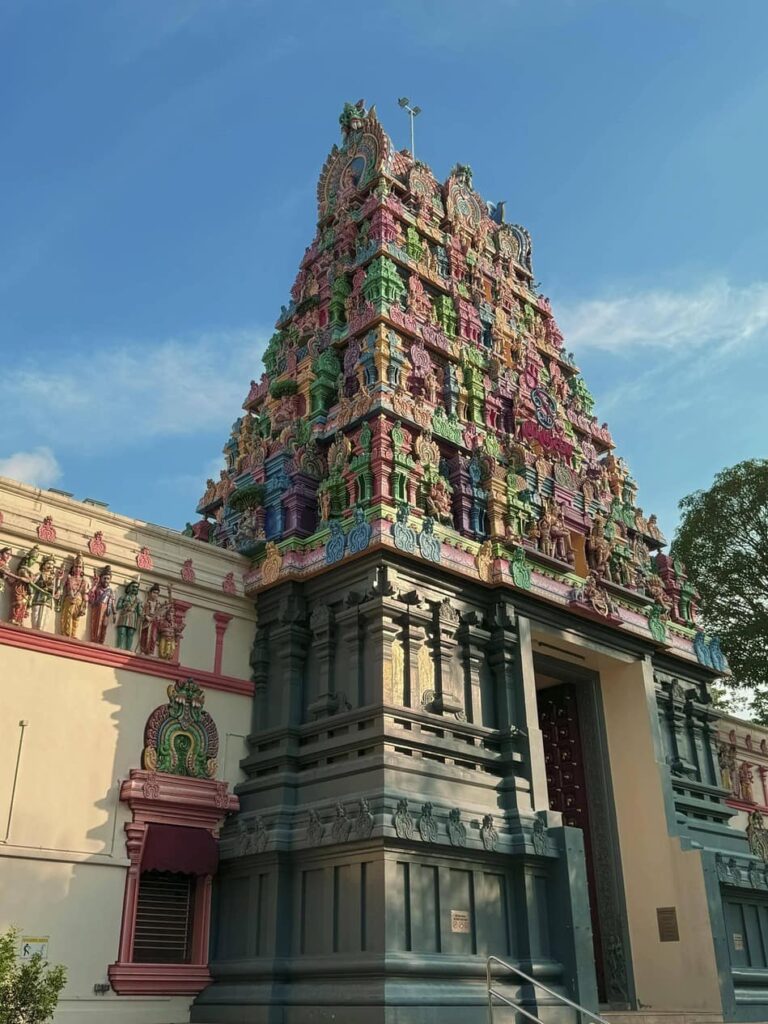
Sri Thendayuthapani Temple at Tank Road, 2026
A short distance away, at 111 Tank Road, is the Church of the Sacred Heart. The church was built between 1906 and 1910 on the site of what had previously been a soy sauce factory.
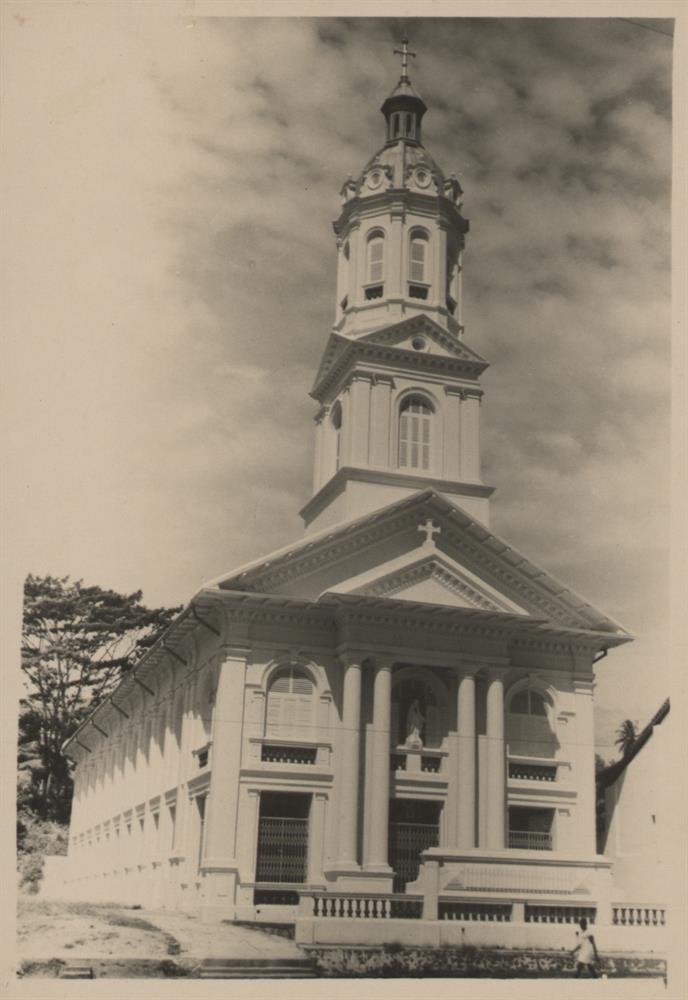
Church of the Sacred Heart, Tank Road in the 1900s. Credits: Lee Kip Lin Collection, National Library Singapore
When the Church of the Sacred Heart was built, the railway was still running from Tank Road, and the temple had already been part of the neighbourhood for several decades. Today, both places of worship remain, while the railway has disappeared from the road.
Where was Singapore’s first railway station?
Singapore’s first railway line opened in 1903, with its terminus at Tank Road.
From here, trains ran north towards Bukit Timah and beyond. For passengers travelling by rail, Tank Road was where the journey began or ended.
That changed in 1932, when the railway was extended to a new terminus at Tanjong Pagar. The Tank Road station closed, and in time the railway became little more than a memory of the road.
Today, it is easy to walk along Tank Road without realising that trains once arrived here.
How did Tank Road get its name?
Tank Road takes its name from a reservoir once built at the foot of Fort Canning Hill.
There is another connection to water on the hill itself. A spring on Fort Canning was traditionally reserved for the women of the Malay royal household. Access to the hill was restricted for much of its early history, and the spring was one of the reasons for that restriction.
Tank Road in Singapore got its name from the early water storage tanks built at the foot of Fort Canning Hill, 2026
There is another connection to water on the hill itself. A spring on Fort Canning was traditionally reserved for the women of the Malay royal household. Access to the hill was restricted for much of its early history, and the spring was one of the reasons for that restriction.
By the late 1890s, the riverbank was lined with godowns, rice mills, sawmills and Chinese-owned boatyards. Goods moved between the river, the warehouses and the businesses further inland.
In 1904, Tan Kah Kee opened Kiam Aik at the junction of North Boat Quay and River Valley Road. The firm initially dealt in rice and later moved into rubber. It remained there until 1934.
What would a passenger have seen leaving Tank Road Station in 1927?
In 1927, a passenger leaving the station would have found a street already busy with several different kinds of activity. The Sri Thendayuthapani Temple had been part of the area for decades, with its gopuram standing out above the road. The Church of the Sacred Heart was much newer, having been completed only a little over a decade earlier.
Behind them was Fort Canning Hill. From the road, much of it would simply have appeared as a wooded hill with the remains of the fort. Further along River Valley Road, at the junction with Mohamed Sultan Road, a new shophouse had just been completed in 1927. Its plaster decorations would still have looked fresh.
At the time, none of these places would have been seen as heritage landmarks. They were simply part of the neighbourhood.
A 1982 photograph of River Valley Road towards Tank Road. Credits: Lee Kip Lin Collection, National Library Singapore
Why did the Tank Road terminus close?
The Tank Road terminus closed in 1932 after the railway was extended to Tanjong Pagar. The new station was closer to the port and became the railway’s main terminus. After twenty-nine years, trains stopped coming to Tank Road.
The temple and church remained, as did Fort Canning Hill. The railway became part of the road’s past.
The reservoir that gave Tank Road its name has long disappeared too. Today, there is little on the street to suggest that trains once arrived here.
Further along Tank Road, the old shophouses provide another link to the neighbourhood’s earlier years.
The story continues in the next chapter, Built on Heritage: A 1927 Corner Shophouse, part of The Crossroads of Light
Don’t forget to check out our FAQ and Instagram page for the latest updates. Browse through our amazing gallery and feel the experience our clients have with White Room Studio!