
Some photography studios are defined by their equipment.
White Room Studio is defined by its building.
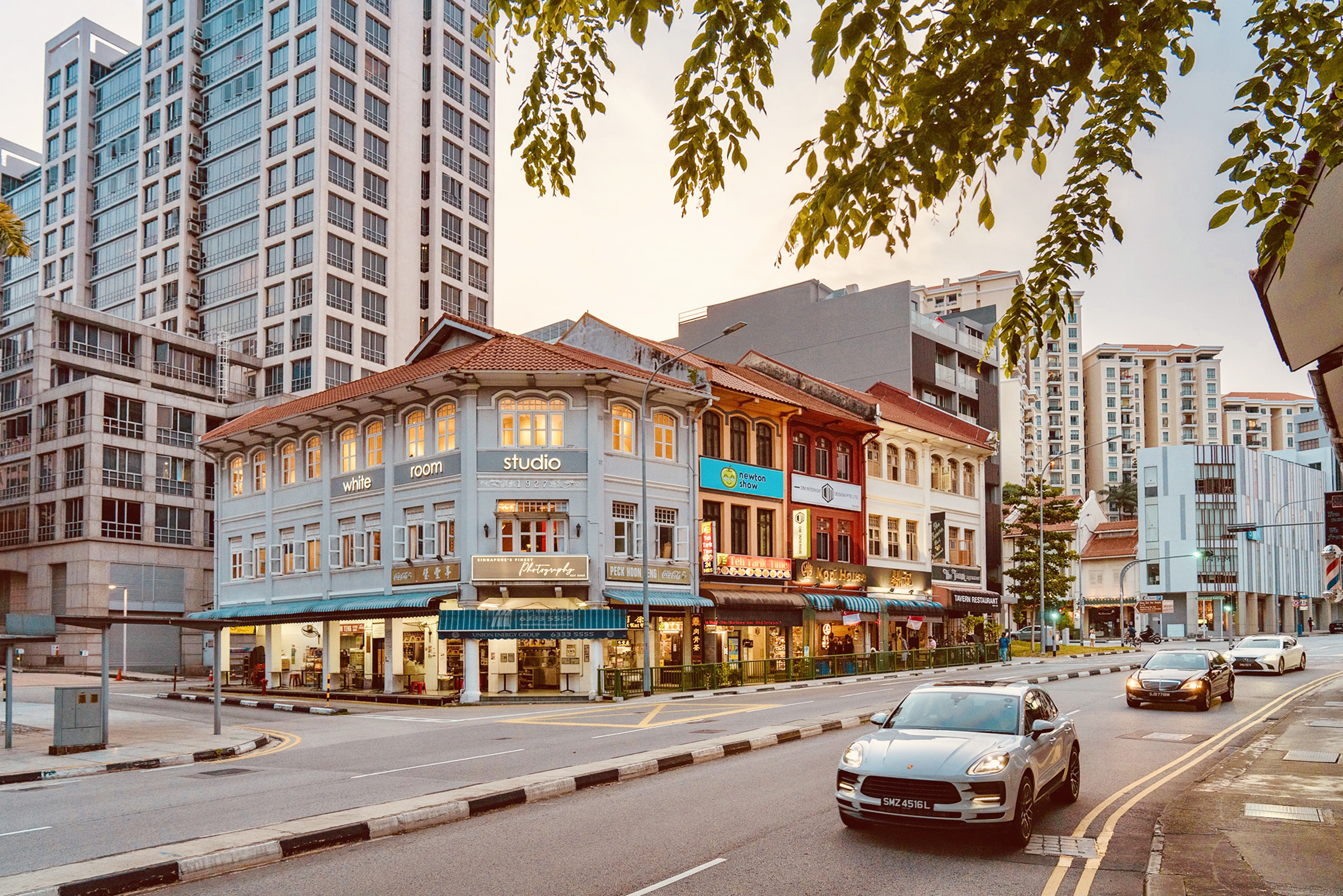
Located within a heritage corner shophouse at 219 River Valley Road, the studio occupies a building that has stood in River Valley since 1927. Long before the surrounding skyline emerged, the shophouse was already part of the neighbourhood’s streetscape.
White Room Studio has called this building home since 2009. Over more than 19,000 portrait sessions, generations of families have walked through its doors to celebrate milestones, relationships, and memories. If you’re considering a family photography studio in Singapore, the environment often plays as important a role as the photographer.
The building was never designed to be a photography studio. Yet many of the qualities that made it practical architecture nearly a century ago now make it uniquely suited to portrait photography.
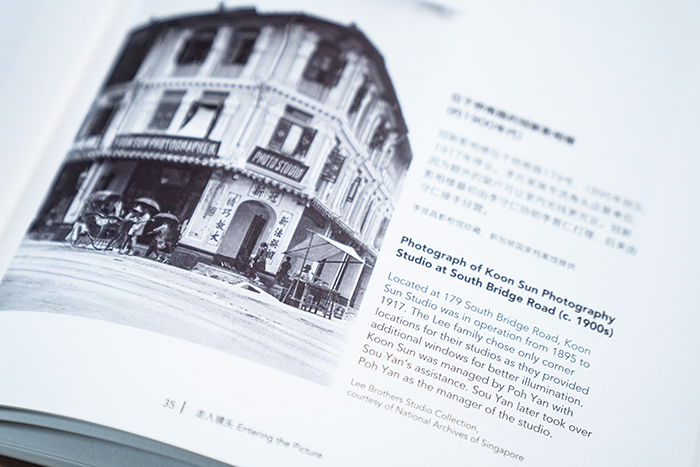
– Credits to from rush to lens
The 1927 corner shophouse at 219 River Valley Road was built during this period. Although not originally designed as a photography studio, it embodied many of the architectural features photographers valued most: tall windows, elevated ceilings, and rooms that caught the natural light. That logic is still visible in the structure, and it is the reason the building works so well as a natural light photography studio in Singapore.
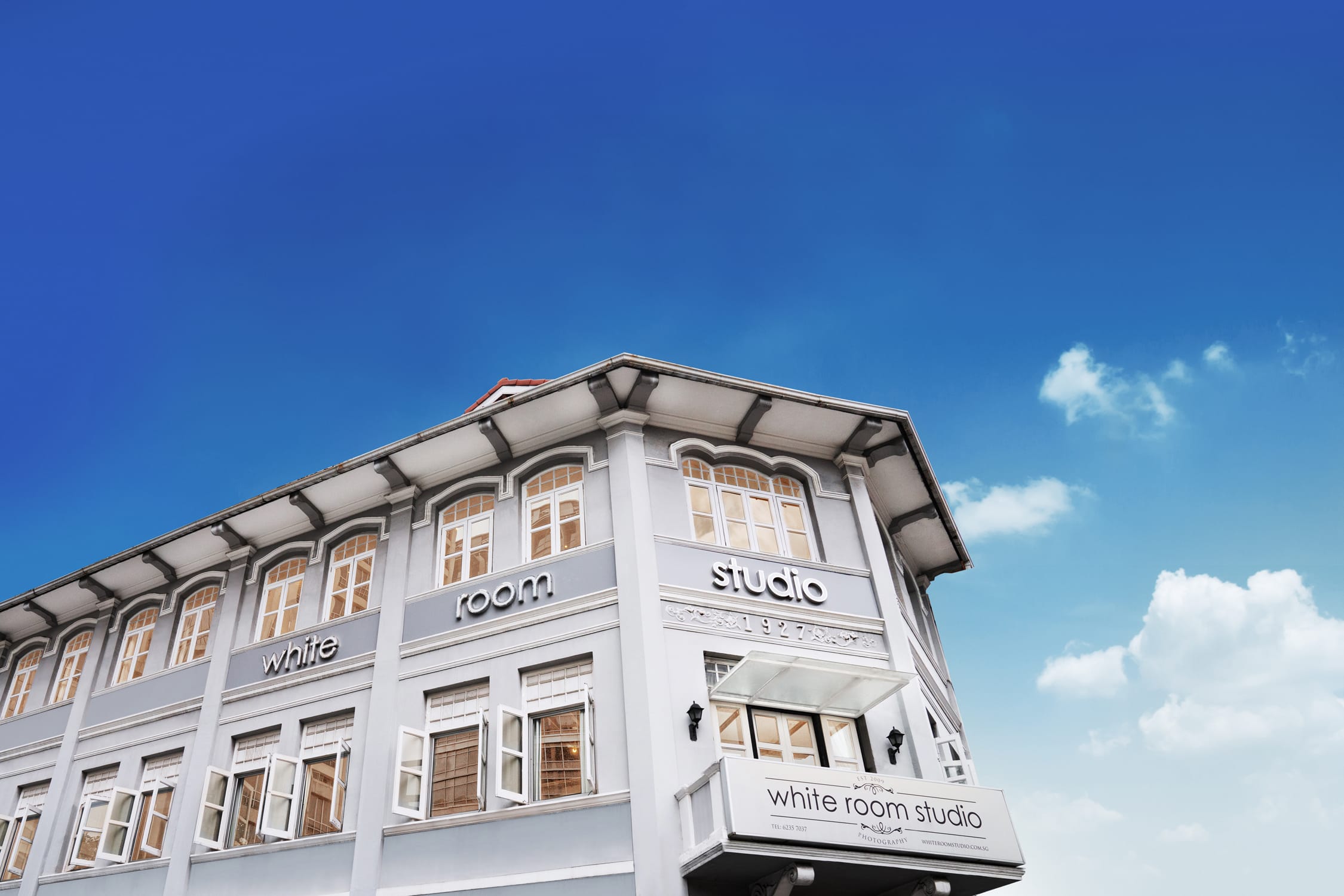
– Today’s 219 River Valley Road, White Room Studio
White Room Studio has occupied this heritage building since 2009. More than 19,000 portrait sessions later, the architecture continues to shape how photographs are created inside it. The building is not simply where the studio operates. It is part of what makes the experience distinctive.
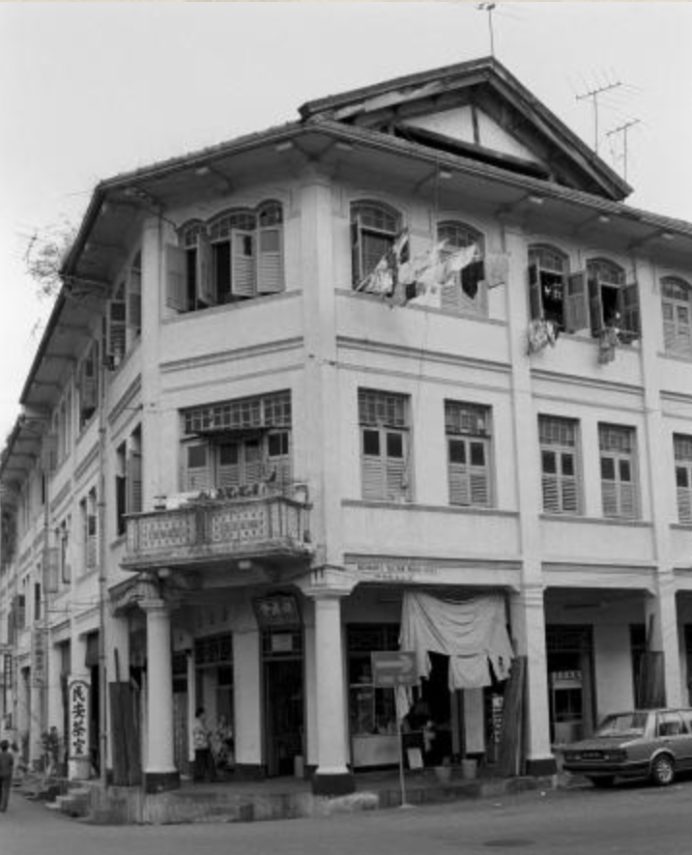
– old 219 River Valley Road, shophouse on left is where White Room Studio is housed now
If you look through the National Library Board’s historical photographs of River Valley, you can find the shophouse at 219 River Valley Road appearing in images from the early twentieth century. The building predates most of what surrounds it today. Built nearly a century ago, it has witnessed River Valley transform from a low-rise neighbourhood into one of Singapore’s most developed districts.
What Does a Corner Position Do to Natural Light?
– Natural light entering from multiple directions within the corner shophouse studio.
Most commercial buildings receive light from one side. One direction. One quality. One brief window during the day when the light becomes especially interesting.
Corner buildings receive light from two sides continuously.
This was precisely why photographers historically favoured corner buildings. When photography relied entirely on daylight, the ability to receive light from multiple angles throughout the day was a practical necessity rather than an aesthetic preference.
The quality of light shifts throughout the day as the sun moves across the sky. Singapore’s humidity softens these transitions, particularly on overcast afternoons.
Inside the studio at 219 River Valley Road, this creates portrait light that changes character over the course of a session. Photographers who have worked here for years understand which corner works best at 9am and which produces beautiful light at 4pm.
That knowledge cannot simply be transferred into another building.
Why the 1927 Shophouse at 219 River Valley Road Is Unusual
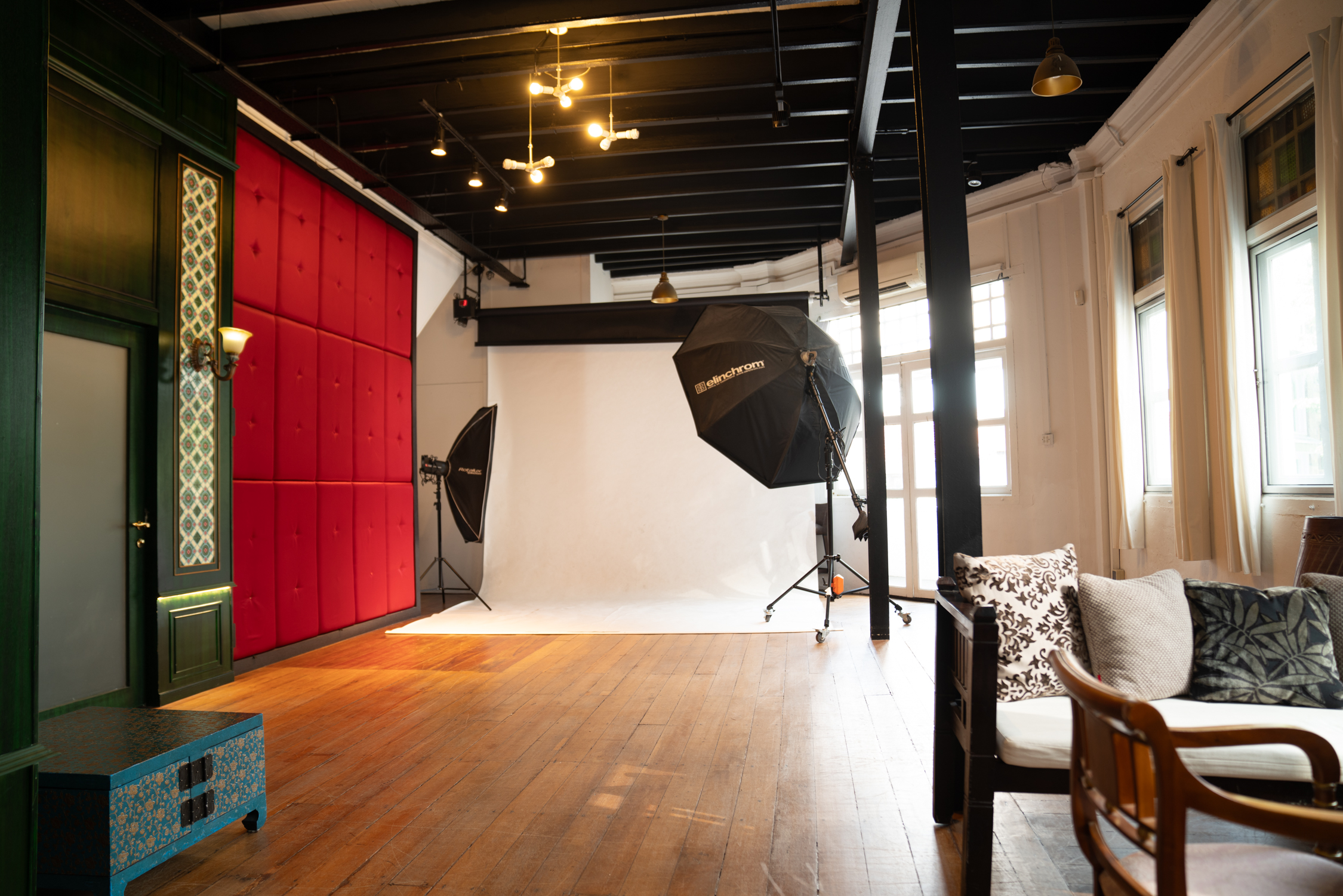
– Soft natural light flows through the second floor’s classic backdrop, Peranakan-inspired walls, and sun-lit balcony.
The shophouse was completed in 1927 with architectural features that were common for its era but increasingly rare in Singapore’s commercial landscape today.
Tall louvred windows on the second floor can be adjusted to influence the direction and quality of incoming light. A balcony facing Fort Canning Hill allows daylight to enter at a low angle in the late afternoon. On the third floor, large European-style windows provide soft, even illumination throughout the day.
The building belongs to a generation of architecture designed before air-conditioning and electric lighting became dominant. Larger windows were not decorative features. They were necessities.
What was once practical building design has become a rare photographic advantage.
White Room Studio inherited these features eighty-two years after the building was completed.
What Does Photography Have to Do With Light?
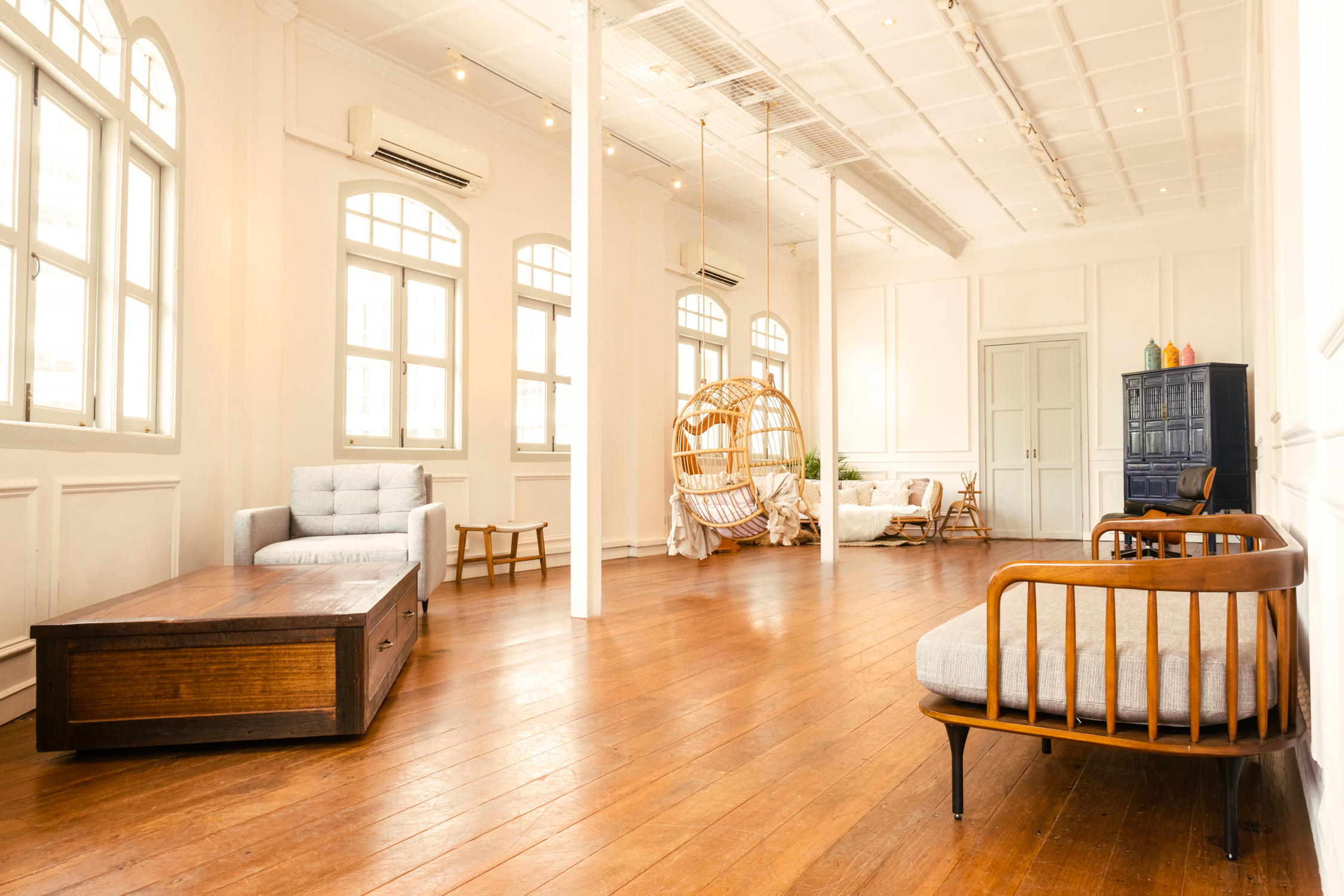
– Soft natural light flowing through tall windows in White Room Studio’s heritage shophouse.
Light remains the foundation of every photograph.
Photographers spend years learning how light behaves, how it changes throughout the day, and how it affects mood, atmosphere, texture, and expression. Whether working indoors, outdoors, or in a heritage building, the quality of available light shapes the final image.
Natural light remains highly valued because it produces gradual transitions between highlights and shadows. Rather than flattening a subject, it creates depth and dimension while preserving a natural appearance.
At White Room Studio, the architecture itself becomes part of the photographic process. The windows, balconies, shutters, and corner positioning all influence how daylight enters the space. Rather than overwhelming the environment with artificial lighting, photographers work with the building and its changing daylight to create portraits that feel relaxed, natural, and authentic.
Without light, there is no photograph.
What Texture Does for Portrait Photography
– The second floor features Peranakan-inspired walls and a sun-lit balcony overlooking lush greenery in Fort Canning.
Most commercial photography studios are designed to be neutral. White walls, even lighting, minimal texture.
That neutrality has advantages, but it also comes with a cost. When the environment disappears, the portrait has to carry everything. People who feel nervous in front of a camera often have little within the space to engage with naturally.
The second floor of White Room Studio contains original Peranakan floor tiles, dark timber beams, and a balcony overlooking Fort Canning and none of these elements were installed for photographic effect.
They were already here.
Children who have grown up in modern condominiums often become fascinated by the textures and details. Grandparents settle naturally into the space. Families find themselves interacting with the environment rather than concentrating solely on the camera.
The Third Floor: The European-style Hallway
– The third floor’s European-style hallway is one of White Room Studio’s most recognisable features.
The third floor offers an entirely different atmosphere.
Where the second floor is rich with heritage texture, the third floor embraces classical European proportions. Wainscotting, clean architectural lines, and the studio’s signature European archway create a more refined aesthetic.
The archway itself spans the width of the room and has become a defining visual element of the White Room Studio logo.
Large windows on two sides provide abundant daylight throughout the day. The resulting light is softer, more even, and less directional than the light found on the second floor.
Families often choose to photograph across both levels during a single session. Explore White Room Studio to discover beautifully designed spaces, each offering a distinct portrait aesthetic shaped by light, texture, and heritage architecture.
No other portrait studio in Singapore offers quite the same combination of Peranakan heritage textures and European-inspired architectural elegance under one roof.
What Happens When Families Are in the Space
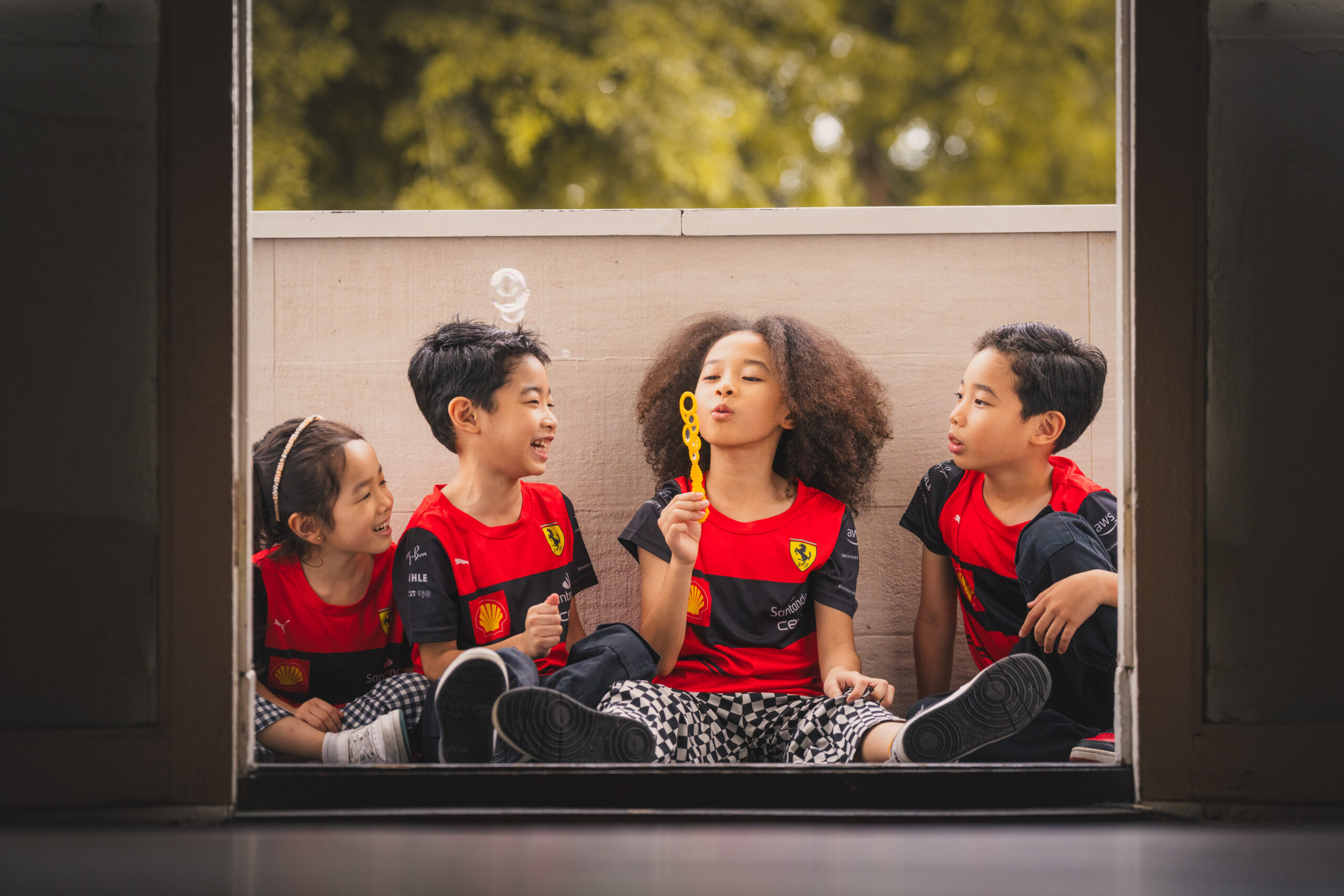
– Playful moments on the balcony at White Room Studio’s heritage shophouse.
The shophouse at 219 River Valley Road has been standing for nearly a century. The warmth of the second floor comes not from interior design decisions but from time itself.
Natural daylight entering through windows and balconies creates an environment that feels familiar rather than theatrical. Families are not stepping onto a brightly lit commercial set. They are entering a heritage space filled with texture, history, and natural light.
Photographers at White Room Studio observe the effects regularly.
The family who arrived tense after traffic relaxes within minutes.
The grandmother who worried about standing too long naturally finds a comfortable corner.
The toddler who refused to look at the camera becomes fascinated by the floor tiles.
This is often the moment when families stop thinking about the camera.
And that is usually when the most meaningful photographs begin.
Reviews
See what others are saying about White Room Studio.
It was truly an enjoyable and stress free experience getting our family photoshoot done in White Room. From arranging appointments to the day of photoshoot and photos selection, the appointments were very closely follow up. We are very lucky to have Yan as our photographer. She has lots of patience and works very well with children. During the session, she was able to distract him, cracked jokes to make him smile and laugh. Sure enough, he smiled and laughed in every single photo. Not forgetting Yan’s assitant, she was also very polite, friendly and helpful which made the whole process very smooth.
The photos came out beyond our expectations and we are all very happy with it. Overall, we have no regrets choosing White Room. The whole team complement each other very well. Will definitely come back again for our future photoshoots.
– Yu Ling Chang
We had a pleasant family photoshoot with White Room Studio. We brought our puppy along and enjoyed a wonderful 1.5-hour session. Randy was very accommodating with both our toddler and our energetic puppy, who kept running around. The photos turned out great — a lovely memento for our family! The studio itself spans two beautifully set-up floors, each with a different feel and atmosphere. The spaces are tastefully decorated with great lighting and props, making every shot look natural and timeless. The staffs were friendly and professional from start to finish, making us feel relaxed throughout the shoot. Highly recommended for anyone looking for a warm and personal family photography experience.
– Joannes Marvin
My family totally enjoyed ourselves at our shoot with White Room Studio! Our photographer Justin was very good with his directions especially with the kids and baby! Loved how our pics turned out.. perfect gift for our parents’ 50th wedding anniversary!
– Shihling Chow
Frequently Asked Questions:
Shophouse Studio
Why is White Room Studio located in a shophouse?
White Room Studio chose the 1927 Peranakan corner shophouse at 219 River Valley Road specifically for its natural light. The corner position provides daylight from two directions simultaneously. The original architecture — tall windows, a Fort Canning-facing balcony, and large European-style windows on the third floor, creates a quality of natural light that purpose-built studios often struggle to replicate.
What is a corner shophouse and why does it produce better portrait photography?
A corner shophouse occupies the junction of two streets and receives natural light from multiple directions. This creates more varied and flexible daylight conditions throughout the day. Different areas of the building receive different qualities of light at different times, providing photographers with greater creative options.
Why is natural light important in portrait photography?
Natural light produces gradual transitions between highlights and shadows, creating portraits that feel dimensional, flattering, and authentic. The architecture of 219 River Valley Road allows daylight to flow through the building throughout the day, making it particularly suitable for natural-light portrait photography.
Is 219 River Valley Road a conservation building?
Yes. 219 River Valley Road is a conserved Peranakan heritage shophouse built in 1927. Many of its original architectural elements remain intact, including the Peranakan floor tiles, timber beams, louvred shutters, balcony, and the European archway on the third floor. White Room Studio has occupied the building since 2009.